

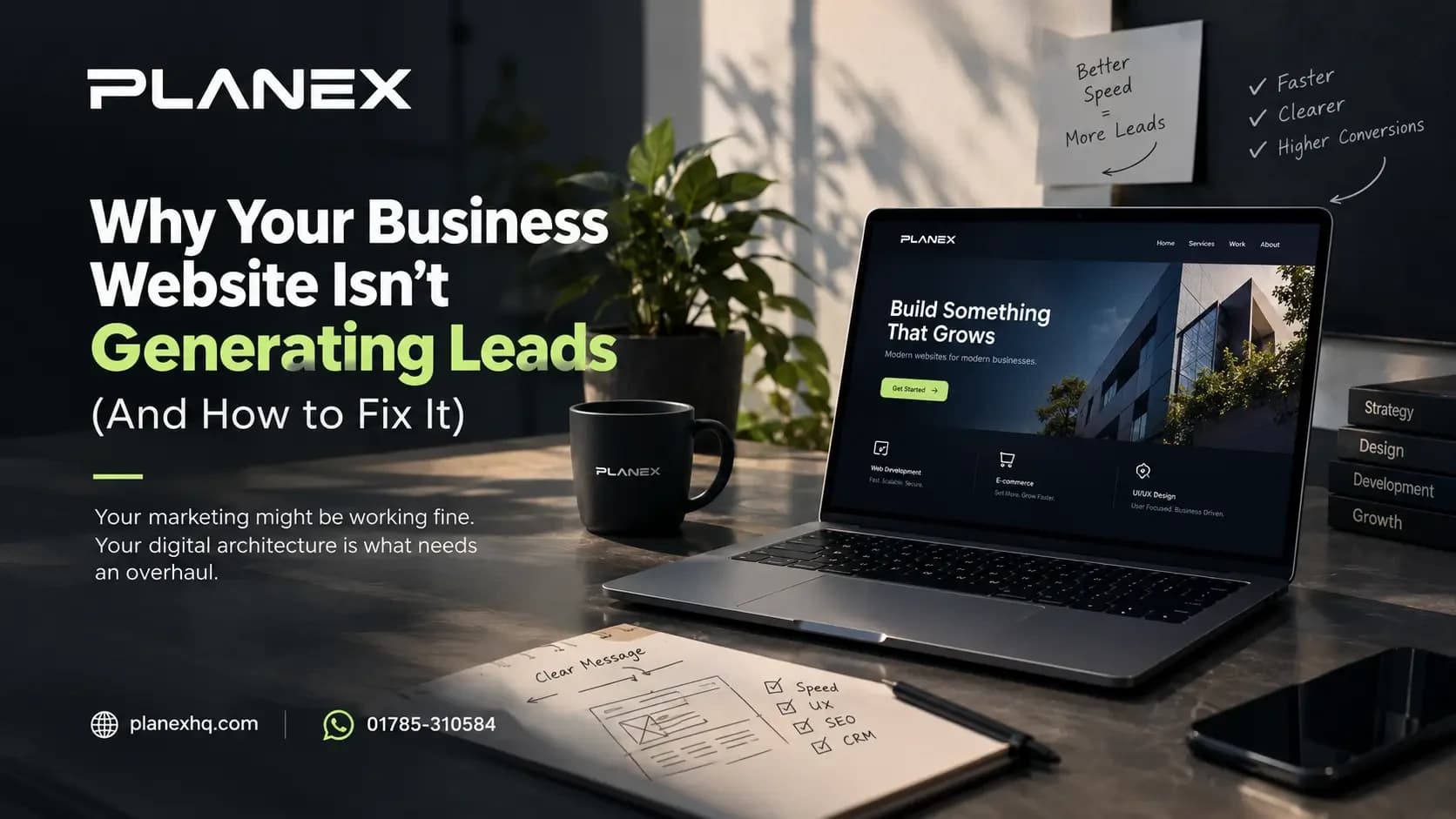
Your marketing might be working fine. Your digital architecture is what needs an overhaul.
You spent money on a new design. You pay for SEO and search ads every month. Your analytics dashboard clearly shows that people are visiting your site. But your sales inbox is completely empty.
This is the most frustrating situation a business owner can face. When a website gets steady traffic but fails to generate qualified inquiries, the problem is rarely your actual product or service. The problem is the digital architecture holding it all together.
A high-performing business website is a meticulously engineered sales tool. If yours is failing to convert, it is likely suffering from one of these five critical roadblocks. Here is exactly how to find them and fix them.
1. Background Code is Slowing You Down
The fastest way to lose a corporate buyer is to make them wait. Buyers today have absolutely zero tolerance for sluggish pages or buttons that take too long to click.
If your website was built on a cheap template using heavy drag-and-drop page builders, the underlying code is a mess. These builders load dozens of background scripts and stylesheets that you do not even use. This bloats the site and kills your load time. A slow site frustrates users and makes them hit the back button before they ever see your contact form.
How to fix it: Test your site using Google PageSpeed Insights. If it takes longer than three seconds to load, you are losing money. The permanent fix is moving away from bloated templates to a custom-coded website that only loads exactly what is needed.
2. Your Homepage is Too Confusing
When a prospective client lands on your homepage, you have about three seconds to answer three basic questions. What do you do? Who do you do it for? How does it make my life better?
Many companies waste the very top of their website on vague corporate jargon. Buyers do not want to read paragraphs about your company history or how you are "empowering synergy." They just want to know if you can solve their specific problem.
How to fix it: Rewrite the top section of your website. Make it brutally clear. Swap out the jargon for a direct statement like "Custom Web Applications for Logistics Companies." Make the client the focus of the message.
3. Your Contact Forms Go to a Black Hole
If your main call to action is a basic "Contact Us" button leading to a massive form with fifteen required fields, you are actively scaring leads away. Nobody wants to fill out a tax return just to ask a question.
Worse, if that form just sends a plain text email to a general inbox, your leads are getting lost. Response times drop, and deals die on the vine.
How to fix it: Ask only for the absolute essentials like Name, Email, and the core problem. Then, have a developer integrate your website directly into a real CRM like HubSpot or Salesforce. This ensures every single submission is instantly routed to a specific sales rep for immediate follow-up.
4. You Are Attracting the Wrong Traffic
You might be getting a thousand visitors a month, but they might just be students doing research. If your website only ranks for basic informational questions, you will get traffic from people who have no intention of buying anything.
How to fix it: Stop targeting generic terms. Shift your focus to commercial keywords. You want to show up when people search for specific solutions, like "hire custom ERP developers" rather than "what is an ERP."
5. You Look Outdated
B2B purchasing decisions carry a lot of financial risk. A procurement manager is not going to hand over their contact information if your site looks like it was built ten years ago. They also will not trust you if you lack clear security protocols or verifiable proof of your past work.
How to fix it: Put your trust signals front and center. Show the logos of companies you have integrated with. Display your security badges. Add real, quantifiable case studies. Your website needs to subconsciously communicate extreme professionalism.
Stop Handing Leads to Your Competitors
Fixing a website that refuses to convert takes more than changing a few button colors. It requires a complete overhaul of your site speed, user journey, and backend data routing.
At Planex, we transform underperforming websites into actual sales engines. We build the custom architecture, clean codebases, and deep CRM integrations you need to turn traffic into revenue.
Stop letting bad digital architecture cost you business. Reach out to the Planex team at planexhq.com or drop us a message on WhatsApp at 01785-310584 to talk about your next project.
Key Questions & Architectural Answers
What is a normal conversion rate for a B2B service website?
Does my website speed actually impact my sales?
Why do I get clicks on my paid ads but zero phone calls?

Full-stack developer with 3+ years of experience delivering production-ready websites, e-commerce platforms, and custom business applications.